
What the app does and why the government says the move is necessary
New Delhi — This week, the Department of Telecommunications (DoT) took the decision to ask smartphone manufacturers and importers to install the Sanchar Saathi mobile application of the government on all the devices meant to be used in India. The authorities have framed this action as a way of fraud prevention, dealing with counterfeit phones and aiding the consumers in safeguarding their mobile identities. The manufacturers are given a short period to comply with the requirements, which the DoT says that the app should be visible, working at the first boot time, and accessible to the users during the initial device setup.
Sanchar Saathi is one of the DoT’s initiatives which is already there in the form of a web portal and a mobile application that one can download. The application comes with several tools for the consumers: the users can authenticate the products with the help of IMEI, see the total number of mobile connections registered in their name, report suspected fraud or spam messages and calls, and also list lost or stolen devices for blocking and tracing across different networks. The government also claims that the application helps by providing the contact numbers of banks and other organizations that can be trusted thus preventing scams for the citizens.
Reasons for government mandating installation
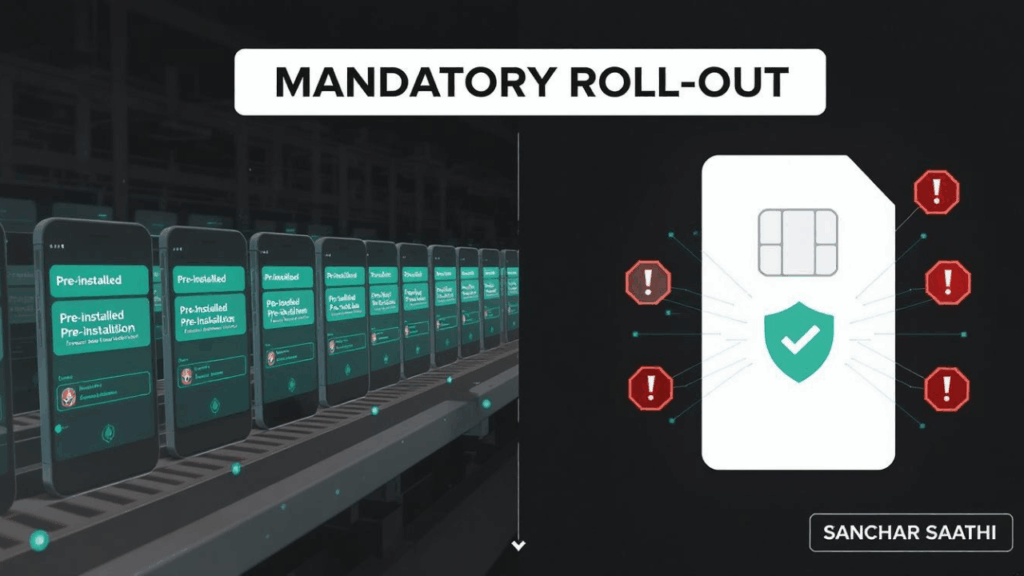
According to officials, the directive is given in reaction to the telecom fraud threat that has been on the rise in recent times and the misuse of fake or copied IMEI numbers that can lead to scams and illegal use of devices. The DoT believes that by giving Sanchar Saathi to all new devices as a default application, consumers will be provided with quick access to a whole government-backed toolkit of device verification and incident reporting that will contribute to the overall security of telecom. The public note of the DoT describes the app as an accessory to the current lost-and-stolen blocking systems and mechanisms for reporting fraud.
The official directives impose a deadline for the application of the rules and require manufacturers to file compliance reports — these are the steps that the government sees as necessary for a swift and uniform rollout of the measure across the market. Officials have pointed out the increase in Sanchar Saathi usage since the launch by showing significant download numbers to support public uptake.
Resistance from the industry and civil rights activists
The order has immediately provoked debate. Tech companies and privacy advocates have expressed their concerns regarding the rights of users, control over the software, and possible security risks resulting from the compulsion to install the software. Global device manufacturers, especially Apple, have expressed their reluctance to comply with the compulsory pre-installation citing security and privacy policies that restrict the preloading of third-party or government apps on iOS devices. Reuters and other media outlets report that Apple has expressed its worries to the Indian officials.
Digital rights activists and certain opposition lawmakers condemned the action as excessive and cautioned that the installation of government software on every phone could lead to more extensive monitoring or less user choice. The media and parliamentary forums have become the battleground of the debate which has seen the critics calling the action intrusive and the supporters emphasizing consumer protection.

What this implies for consumers and the market
In case that manufacturers do what is required, the new mobile phones which are sold for use in India will come with Sanchar Saathi already installed and ready to be used right from the first boot. Advocates say that for the consumers this will be a huge facilitator in the verification of a device’s IMEI, recognizing unknown mobile connections in their name, and reporting fraud without having the trouble of looking for an app in an app store. The order raises numerous questions regarding the implementation logistics, platform policies, and the harmonization of global device ecosystems with local regulatory requirements for the manufacturers and platform providers.
Conclusion
The Sanchar Saathi pre-installation order marks a significant milestone in the Indian government’s telecom consumer protection policy the combination of an active, government-run toolset and regulatory muscle to ensure broad availability. It will largely depend on the details of implementation, the reactions of the manufacturers, and the extent to which privacy safeguards are enforced whether the policy will reduce the incidence of fraud and the circulation of counterfeit devices as intended by the DoT or will create long-term tensions around privacy and control over platforms.