
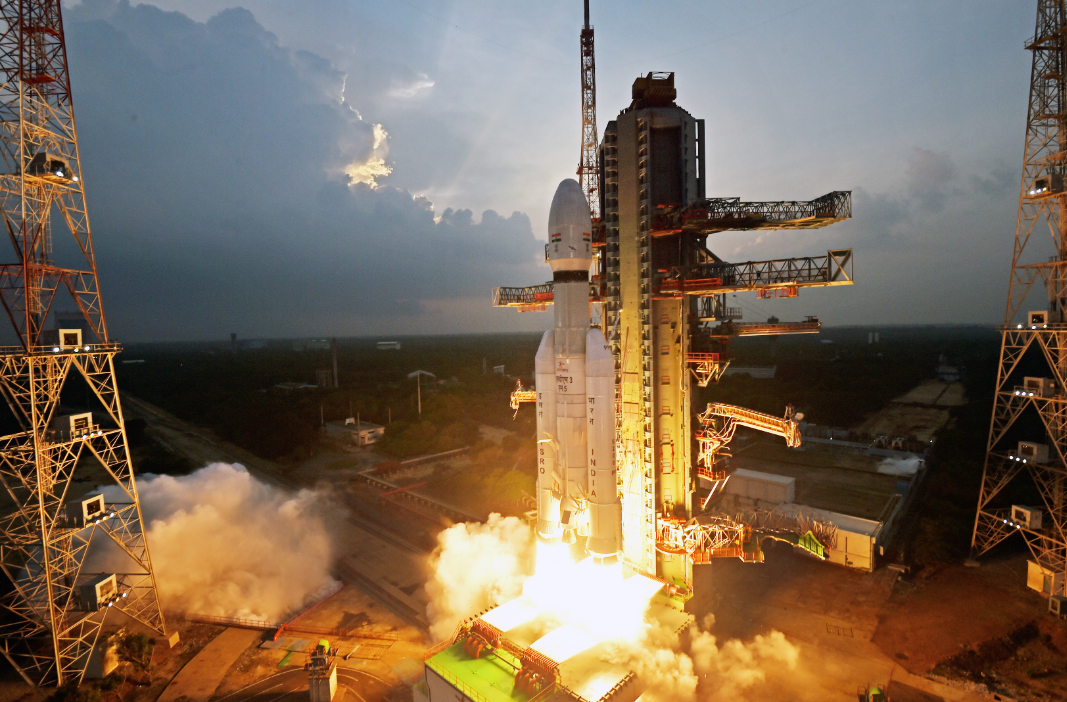
Sriharikota, November 2, 2025 : A major milestone for the nation’s space ambitions, ISRO propelled the heaviest communication satellite of its kind, CMS-03 (or GSAT-7R), from the Second Launch Pad of the Satish Dhawan Space Centre, Sriharikota. The mission was carried out using the LVM3-M5 heavy-lift launch vehicle often referred to as “Bahubali” thus, it was another accomplishment in India’s self-reliant space program.
Approximately, the CMS-03 satellite comes in at a weight of about 4,410 kg, thus being the heaviest communication satellite India has ever placed in geostationary transfer orbit (GTO) so far.
CMS-03, built for multi-band communication (C, Extended C, and Ku bands), is specifically designed to cater to both civilian and maritime users most of all, providing the Indian Navy with augmentation of its capabilities in the Indian Ocean Region.
ISRO Chairman V. Narayanan described the mission as a “shining example of Atmanirbhar Bharat,” highlighting the indigenous technologies and improved payload capability that made the launch possible.
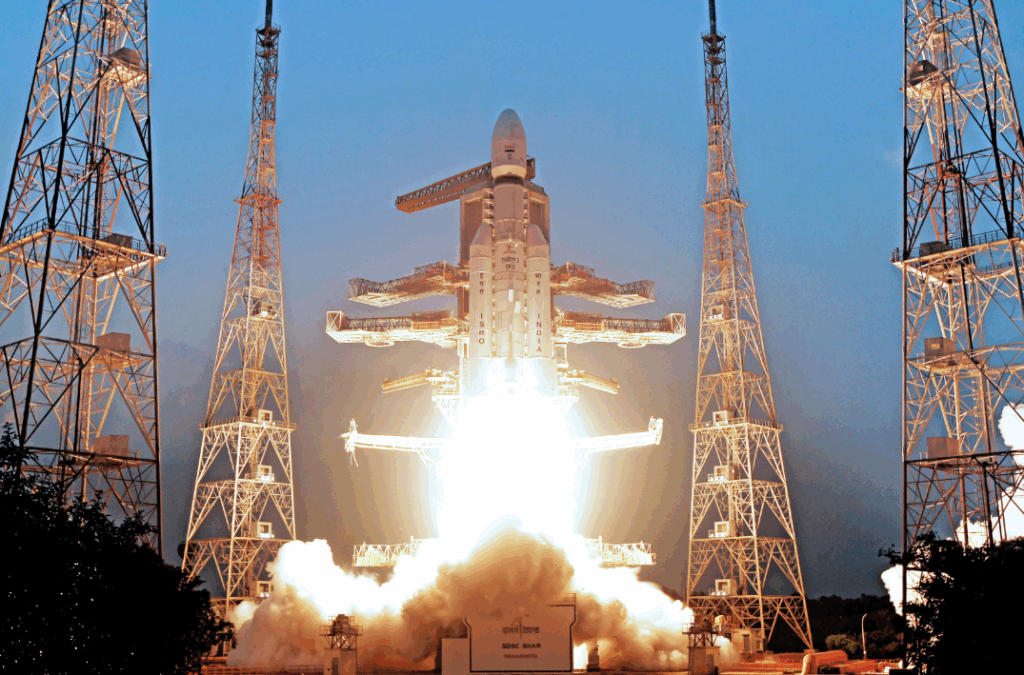
The launch sequence
The launch of the LVM3-M5 rocket started with a countdown on the evening of November 1 and went through the usual checks even though the weather was not very good.
About 5:26 PM IST, the missile was fired up and went off the pad, the huge twin solid boosters at its side making a big noise. The cryogenic upper stage took over a few minutes later, and at around 16 minutes into the mission, the CMS-03 satellite was detached and put into its designated GTO.
Why this matters
The achievement of a 4,400+ kg class payload from Indian soil is a remarkable step for India’s commercial satellite launch capability. Some of the largest Indian satellites have previously been launched by means of foreign vehicles.
The CMS-03 satellite plays a major role in the modern Indian space communications network, especially over the sea, by providing military-grade communication links and through the use of several frequency bands.
The mission has also assisted in confirming the power and reliability of the Indian heavy-lift launcher fleet, thus opening up a whole range of possibilities (including manned missions or super satellites) for the future.
Looking ahead
According to ISRO, CMS-03 will be operational for around 15 years.
The orbit-raising operations to transition the satellite from the transfer orbit to its final geostationary position will be the next step, followed by the commissioning of its payloads. High-capacity data, voice and video links will be allowed for sea, air, and land-based users once the system is fully operational.
The launching of India’s next heavy-satellite is already ahead in the schedule, and this achievement has made ISRO a stronger contender in the worldwide commercial and strategic launch market.
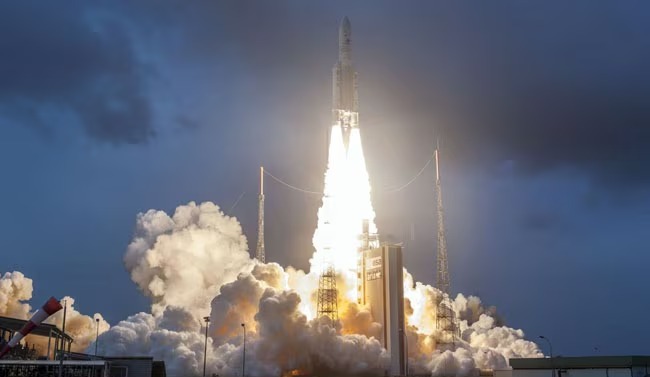
Final lift-off
The moment the countdown finished and the rocket went up into the dark sky over the Bay of Bengal, the mission crew in the control room could no longer hold their excitement and started clapping. The launch wouldn’t have the great public turnout like a holiday celebration but for the groups of engineers, technologists, and defense planners around India, it was a silent leap forward—a signal that sometimes the most considerable movements occur above us.